
Photo: USGS Educational Resources / Wikimedia Commons, Public domain
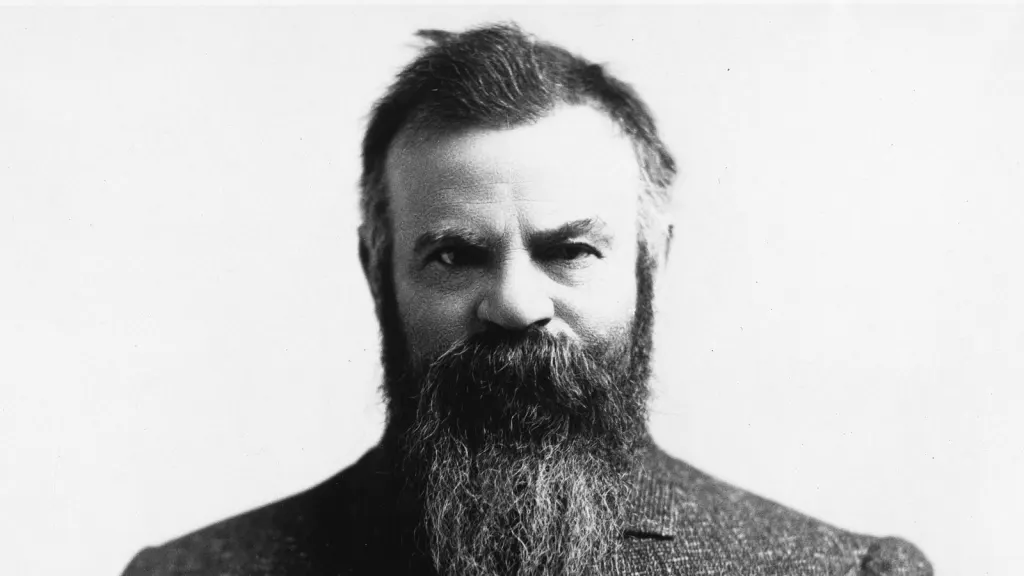
John Wesley Powell, born March 24, 1834, was a U.S. Army soldier, explorer of the American West and director of major scientific institutions. He is best known for a three-month river trip down the Green and Colorado rivers in 1869, which included the first official U.S. government-sponsored passage through the Grand Canyon.
Before that trip he led expeditions into the Rocky Mountains of the Colorado Territory in 1867 and 1868. In 1868, Powell, William Byers and five other men climbed Longs Peak, and Powell spent that winter camped on the White River and made excursions down the White and Green rivers.
President James A. Garfield appointed him the second director of the U.S. Geological Survey, a post he held from 1881 to 1894. He proposed policies for developing the arid West that the reference biography calls prescient for their accurate assessment of conditions. He was the first director of the Smithsonian Institution’s Bureau of Ethnology and the first president of the Anthropological Society of Washington, founded in 1879.
The same biography notes that Powell advocated the cultural assimilation of Native Americans into the United States and the replacement of Native hunting practices with sedentary agriculture, a stance that the biography records alongside his scientific work. Powell died on Sept. 23, 1902.
The Colorado River that Powell traveled is the subject of the water stories elsewhere in this paper’s Energy & Water section. This account draws on one published reference biography only.